Learning how a vehicle works no longer requires enrolling in an expensive trade school, lugging around greasy paper manuals, or spending years working for free as an apprentice in a shop. The modern smartphone has quietly evolved into one of the most effective mechanical training tools available. Mastering the basics of auto repair directly from your mobile device is not only achievable—it is fast, engaging, and costs absolutely nothing.
advertisement
Whether you want to stop overpaying for basic vehicle maintenance, figure out why your dashboard warning lights are flashing, or build foundational skills for a career in the trade, mobile software provides instant access. With a few key downloads, you can turn your daily commute or evening downtime into a hands-on mechanical training center.
This guide breaks down seven standout, zero-cost mobile tools tailored to help complete beginners build confidence under the hood. Combining hands-on digital simulations, real-world video breakdowns, engineering fundamentals, and diagnostic tools, you can build a complete mechanical skill set without spending a dime.
1. Car Mechanic Simulator Mobile
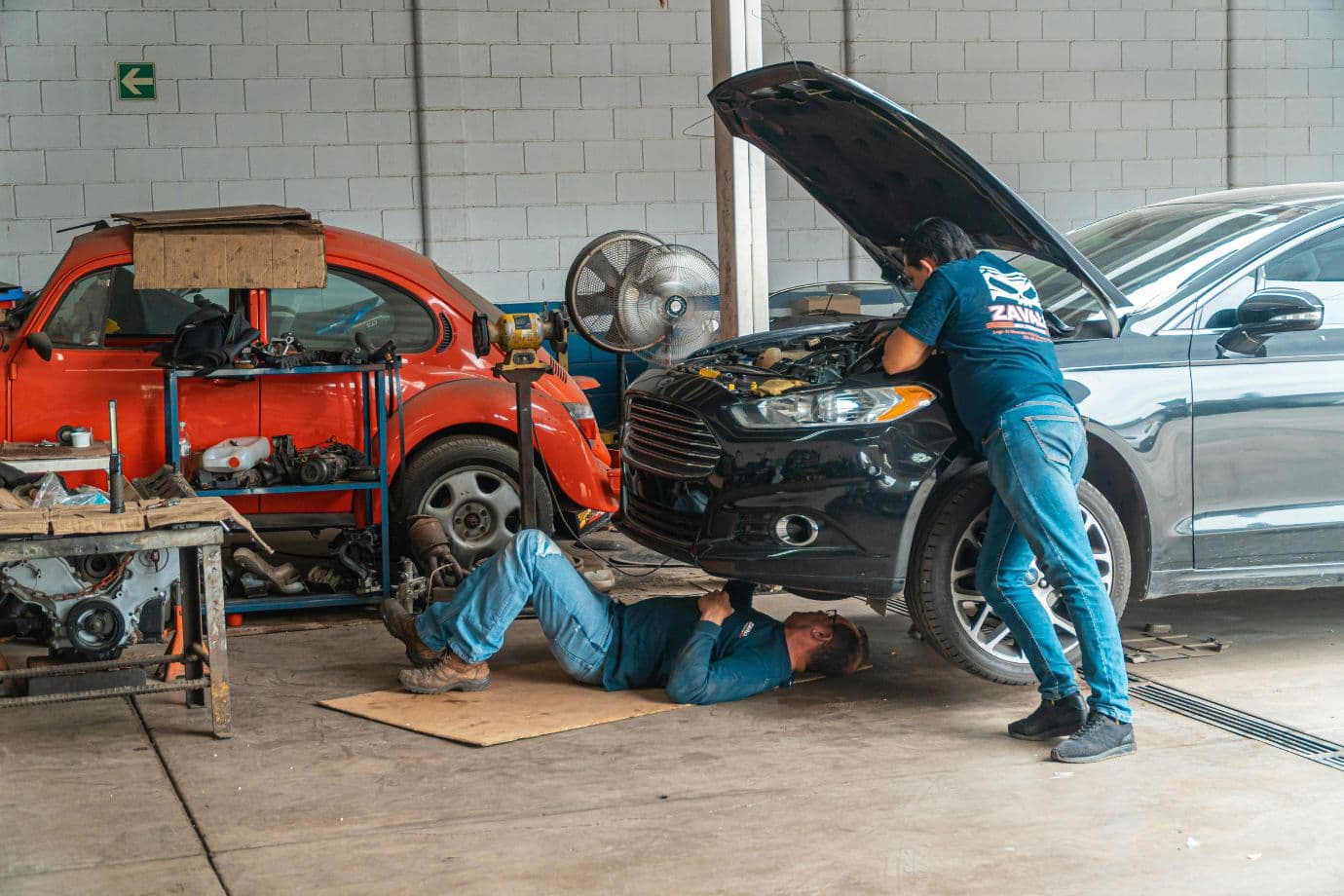
Opening a vehicle’s hood for the first time often feels overwhelming—it looks like an intimidating tangle of metal blocks, rubber hoses, and electrical connectors. For absolute beginners, conquering that initial visual confusion is the hardest part. That is where Car Mechanic Simulator Mobile serves as a surprisingly clever learning tool.
While built as an interactive simulation game, its accurate depiction of engine layouts makes it a powerful educational asset. By solving virtual repair jobs, you get hands-on experience removing, evaluating, and reinstalling internal components—from brake calipers and suspension arms to spark plugs and transmission housings. This interactive process builds spatial recognition and muscle memory faster than passive reading.
How to Get the Most Out of It:
- Install the app and start with the basic maintenance missions.
- Pay close attention to how auxiliary parts attach to the engine block.
- Replay repair tasks to lock in the logical sequence of component assembly.


You are being redirected to another website.
2. YouTube
Reading a manual explains how a system works, but watching an expert work on it changes everything. YouTube remains an unrivaled repository of free technical knowledge, hosting millions of step-by-step repair guides produced by certified mechanics and trade instructors.
Whether you need to replace your vehicle's brake pads, swap an alternator, flush a radiator, or trace a mysterious electrical drain, a complete visual walk-through is instantly searchable. Watching experienced technicians tackle real-world jobs helps you pick up critical working habits—such as proper tool handling, bolt torque ordering, and essential safety measures—that text alone cannot demonstrate.
How to Get the Most Out of It:
- Search using exact keywords (e.g., "how to change oil on [your car year/model]").
- Save high-quality tutorials into organized playlists by system (Brakes, Engine, Electrical).
- Watch a complete repair sequence two or three times before attempting it on your car.
You are being redirected to another website.
3. AutoCodes
Modern automobiles function as rolling computer networks packed with sensors. When a malfunction occurs, the onboard computer logs an On-Board Diagnostics code (OBD-II). Knowing how to read and interpret these codes is a non-negotiable skill for modern vehicle repair.
AutoCodes acts as a free, comprehensive reference dictionary for automotive troubleshooting. Instead of leaving you confused by a cryptic code like P0300, the app translates fault codes into plain English. It highlights the underlying issue, lists affected engine systems, outlines common causes, and suggests logical repair steps.
How to Get the Most Out of It:
- Keep the app installed on your phone for quick roadside or garage reference.
- Look beyond the basic definition to understand why the sensor recorded an error.
- Study the listed repair paths to learn how professional techs isolate root causes.
You are being redirected to another website.
4. OBD Auto Doctor
To elevate your troubleshooting skills, you need to monitor what vehicle sensors are reporting in real time. OBD Auto Doctor bridge the gap between basic code scanning and real-time system monitoring, giving beginners a look at live engine metrics.
Even before purchasing a Bluetooth OBD-II scanner tool, exploring the app's menu structures helps you understand how technicians evaluate health parameters. When paired with an affordable wireless OBD adapter, the app displays live readings like coolant temperature, oxygen sensor feedback, fuel trim ratios, and engine RPM. Learning to interpret these live streams helps you analyze engine health proactively.
How to Get the Most Out of It:
- Pair the app with a compatible wireless OBD-II adapter connected to your car's diagnostic port.
- Compare sensor values at idle versus during acceleration.
- Learn baseline normal values so you can easily spot abnormal readings later.
You are being redirected to another website.
5. Learn Automotive Engineering
Knowing how to swap a part is useful, but understanding why that part exists makes you a real mechanic. Learn Automotive Engineering focuses entirely on foundational mechanics and mechanical theory.
The application breaks down complex topics—including four-stroke combustion cycles, gear ratios, fuel injection design, cooling thermodynamics, and wiring diagrams—into short, easy-to-read chapters. Structured specifically for newcomers, the material lets you digest essential engineering concepts without getting lost in overly dense technical jargon.
How to Get the Most Out of It:
- Read one short section daily to build steady momentum.
- Study the included mechanical diagrams to visualize internal fluid and power flow.
- Take quick notes to connect theoretical concepts with practical video tutorials.
You are being redirected to another website.
6. SkillCat
If you learn best through an organized curriculum rather than random searches, SkillCat offers an ideal setup. Built as a digital trade school platform, its automotive courses guide you step-by-step from beginner concepts to advanced repair principles.
Rather than jumping between disconnected topics, SkillCat organizes learning into clear modules filled with interactive slides and quick comprehension checks. This structured, gamified flow keeps learning engaging while ensuring you build a solid foundation without skipping critical safety or technical steps.
How to Get the Most Out of It:
- Create a free account to track your progress across training modules.
- Work through the courses in chronological order.
- Complete the knowledge quizzes at the end of each unit to confirm your understanding.
You are being redirected to another website.
7. iFixit
While famously known for electronics repair, iFixit boasts an expansive collection of high-quality automotive repair and maintenance guides.
The platform stands out for its clear, photo-heavy tutorials that walk you through procedures step by step, explicitly identifying the exact tools and fastener sizes required. Even if your exact vehicle model isn't listed, the core mechanical steps—such as removing stubborn bolts, handling gaskets, and adhering to torque specs—apply across nearly all vehicles. It also places a heavy emphasis on personal and workshop safety.
How to Get the Most Out of It:
- Search for your specific vehicle or general maintenance task before starting work.
- Read through the entire tutorial before reaching for a wrench.
- Compare the guide’s high-res photographs with your engine bay to verify component alignment.
You are being redirected to another website.
Final Thoughts: Creating Your Personal DIY Learning Plan
Becoming proficient in auto repair takes patience, practice, and continuous learning. By combining these seven free apps—Car Mechanic Simulator Mobile for spatial familiarity, YouTube for visual instruction, AutoCodes and OBD Auto Doctor for electronic diagnostics, Learn Automotive Engineering for theory, SkillCat for structured coursework, and iFixit for precise step-by-step execution—you create a complete mobile training ecosystem.
Dedicate a few minutes each day to studying, review key concepts regularly, and apply what you learn to real-world vehicles whenever possible. Stay consistent, and these free tools will save you thousands on repair bills while giving you total confidence over your car.